
Europe’s Beating Cancer Plan Implementation for Children and Adolescents with Cancer: Looking Ahead
While progress is evident, EU continued support for local implementation of project outcomes and tools is crucial to avoid duplication and secure sustainability of EU cancer action.
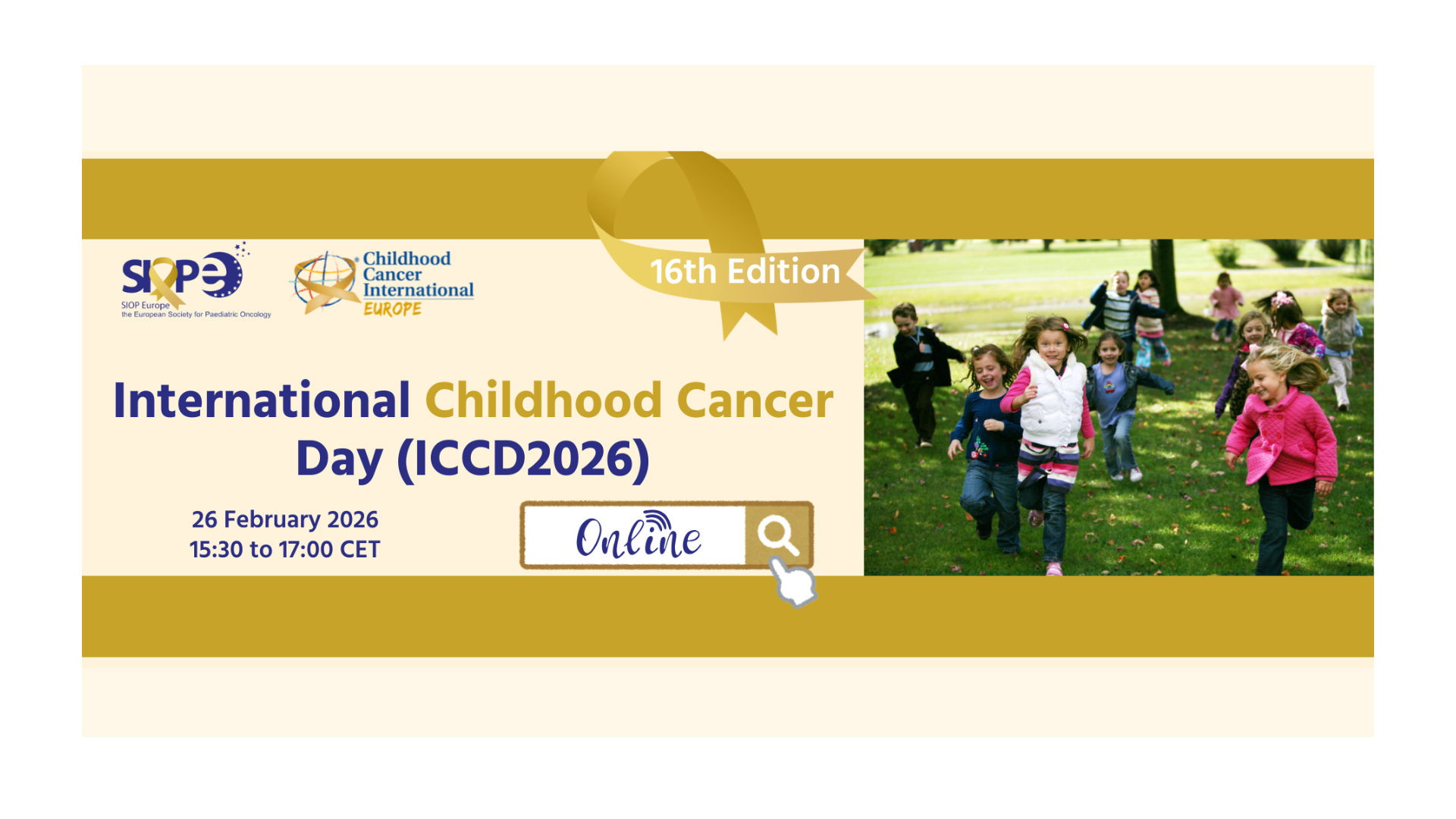
In light of the 2026 International Childhood Cancer Day (ICCD), Childhood Cancer International – Europe (CCI Europe) and the European Society for Paediatric Oncology (SIOPE) organised a policy dialogue on Europe’s Beating Cancer Plan (EBCP). The online event, hosted by our Childhood Cancer support Champion and Member of the European Parliament (MEP) Vlad Voiculescu (Renew, Romania) on 26 February, was attended by over 100 participants. The dialogue highlighted the Plan’s progress, including its Spotlight on Childhood Cancer, as well as future actions, resources and policy commitment required to address remaining gaps and ensure its continued support for children and adolescents with cancer across Europe.
Opening the discussion, MEP Vlad Voiculescu stressed the importance of ensuring that European initiatives translate into tangible benefits for citizens.
As he noted, “for every citizen to ask: what does Europe do for me?” He emphasised that policy commitments must deliver measurable results, adding that “equity shouldn’t be just a term we bring up, but it should be measurable.”
The EU’s EBCP has supported major initiatives to improve childhood and adolescent cancer research, treatment, care, and long-term survivorship. Through keynote speeches and a panel discussion, EU policymakers, clinicians, parents and survivors provided insightful perspectives on the achievements and persistent gaps in the Plan and how to continue and strengthen these efforts while maintaining the Spotlight on Childhood Cancer.
Hannah Gsell, patient advocate and project manager at CCI Europe, highlighted concrete examples of EBCP initiatives in survivorship and psychosocial care, namely EU-CAYAS-NET (now continuing as the YARN project), the SmartCare digital survivorship tool, and IMPACT-EU. These flagship initiatives have delivered practical resources, guidelines and tools co-created with healthcare professionals and patient advocates. Reflecting on the importance of these initiatives, she stressed,
“Because survivorship and psychosocial care are not add-ons. They are central to dignity, quality of life, and true recovery of so many young people out there in Europe.”
Reflecting on the broader EU policy landscape, Matthias Schuppe (DG SANTE, European Commission) emphasised the importance of equitable access and visible progress:
“With the Europe Beating Cancer Plan, we have a roadmap, and the first concrete results are already visible. Our collaborative task is to ensure that every child and every young person with cancer in Europe benefits from the highest standards of care, no matter where in Europe they live.”
Speakers also highlighted the importance of ensuring that expertise and innovation reach all children across Europe. As Prof. Gilles Vassal (SIOPE Board Member) emphasised,
“the key issue is to provide access to this expertise to all children,” particularly in the context of rare and complex cancers requiring highly specialised care. Reflecting the urgency of continuing progress, he also reminded participants that “this is not the time to give up.”
At the same time, the discussion underscored that significant challenges remain in research and innovation. Prof. Ruth Ladenstein (SIOPE Board Member & ERN PaedCan Coordinator) pointed out that
“even in resource-rich countries there is still a lack of infrastructures and support for academic clinical trials,” highlighting the need for stronger and more sustainable support frameworks for research across Europe.
The importance of collaboration between stakeholders across Europe was also emphasised during the discussion. Highlighting the value of European initiatives that bring these communities together, Delphine Heenen, CCI Europe Regional Committee Member, noted that
“The cancer mission was a game changer, it is ambitious, and it allowed for cross-border research projects, and that’s really essential in the rare disease area like paediatric cancer. Viable progress requires collaboration.”
Participants also stressed the importance of cooperation between organisations and patient groups. As Anita Kienesberger, Chair of CCI Europe Regional Committee Member, explained,
“we are not competing, we collaborate,”
underlining that partnership between stakeholders is essential to advance childhood cancer care across Europe.
MEP Romana Jerković (S&D, Croatia) highlighted the real-life impact of EU initiatives on families navigating childhood cancer, stressing that
“we need continued and targeted EU health funding for childhood cancer.” She also emphasised the importance of equitable access across Europe: “EU funding should increasingly support cross-border care, training programs, and European reference networks, helping ensure that where a child lives does not determine whether they survive.”
Annika Nowak from DG Research – European Commission, highlighted the role of research in connecting innovators and communities. She emphasised how the mission approach links research outcomes to practical implementation and broader stakeholder involvement:
“What can we do from the research side [is to] help innovators, the researchers, but also include the broader community.”
In his pre-recorded video message, MEP Loucas Fourlas (EPP, Cyprus) also highlighted the urgency of equal access and long-term follow-up for survivors.
“Children and their families need long-term follow-up, mental health support, and programs that help them live full and healthy lives. Survivors deserve not just to live, but to live well,” he said, emphasising that European initiatives must deliver tangible benefits for every child, no matter where they live.
Finally, Prof. Uta Dirksen, SIOPE President, stressed the importance of collective action across Europe:
“I think we can advance the fields, we can reach our aims, I think, all together,” highlighting the crucial role of collaboration between clinical trial groups, policymakers, and stakeholders to strengthen childhood cancer care.
While Dr. Monica Muraca (PanCare & SIOPE), highlighted the challenges in survivorship care:
“Obviously, the access to survivorship care remain a major challenge.”
There is no question that the projects have already made a positive difference for patients, survivors and families across Europe. However, speakers underlined that their full impact will only be realised if their results are sustainably implemented, integrated into national systems, and supported beyond initial project funding cycles. The event highlighted that to achieve the EBCP’s objectives, future efforts require long-term EU investment. Continued financial and political commitment will ensure sustainable, local implementation of EU initiatives across Europe and that no child or adolescent with cancer in Europe is left behind.