
Gold September 2026: Bringing the patient perspective into European childhood cancer policy
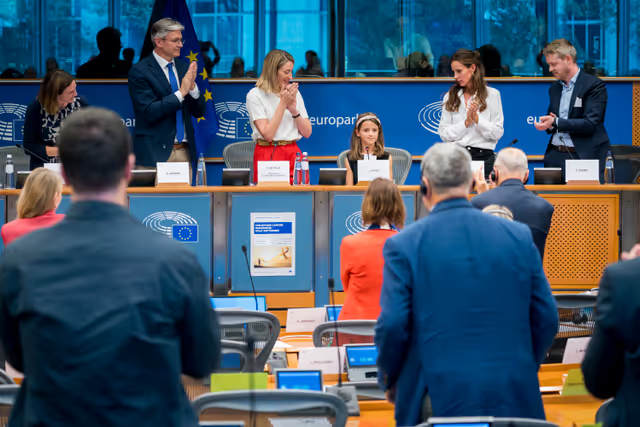
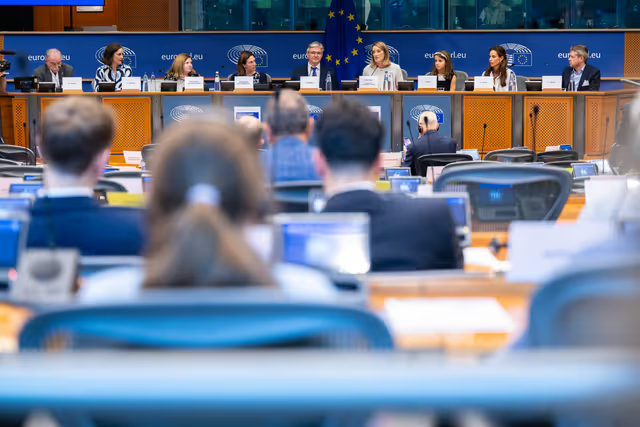
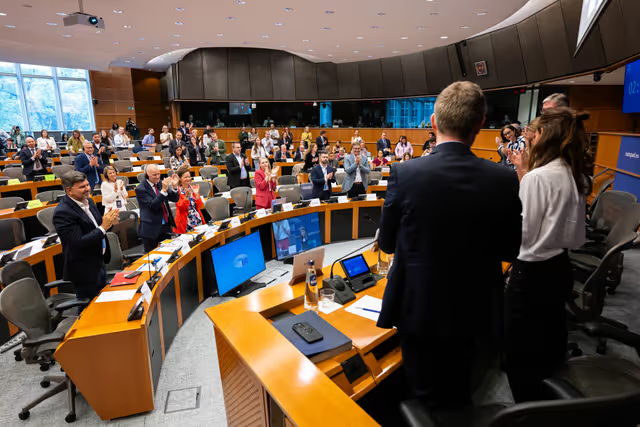
For the first time, the patient perspective on childhood cancer was heard at an official Exchange of Views on paediatric cancer at the European Parliament. Organised by the Committee on Public Health (SANT) on 2 September 2026, the discussion brought together people with lived experience, patient advocates, healthcare professionals, and policymakers to discuss the challenges affecting children and adolescents with cancer in Europe.
Taking place as part of Gold September, the Exchange of Views offered an opportunity to discuss some of the key challenges facing children with cancer in Europe, from access to medicines and innovation to specialised care and cross-border healthcare.
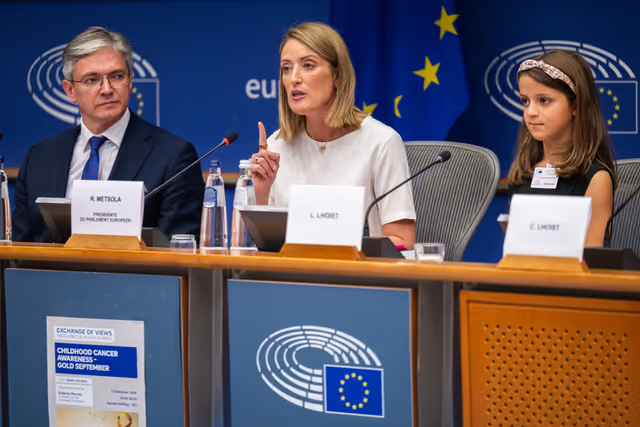
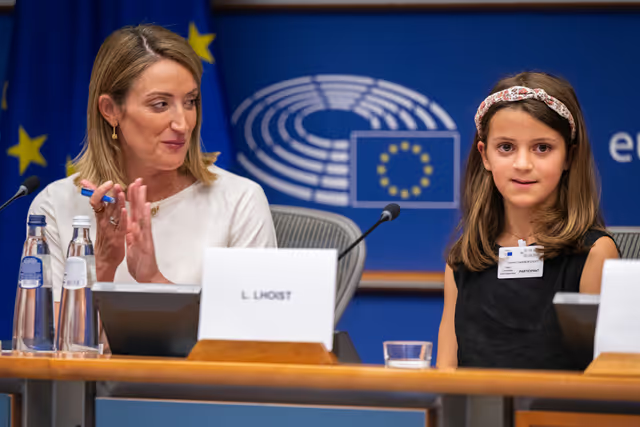
The significance of the discussion was further highlighted by Roberta Metsola, President of the European Parliament, who opened the session with a special address.
“This is all progress, but there is still so much we have to do. There is still so far to go, from fixing medicine shortages to making access to care more equal across Europe.” – Roberta Metsola, President of the European Parliament
Several MEPs also intervened during the discussion, echoing the need for stronger support and continued action on childhood cancer. MEP Adam Jarubas, SANT Committee Chair, highlighted the importance of greater collaboration, investment and more effective systems across national and European levels.
“We are doing a lot in this area, but there is still a great deal of work ahead of us. We need more collaboration, we need more money for fighting cancer, and we should create more effective systems within national competence and European institutions.” – MEP Adam Jarubas, SANT Committee Chair
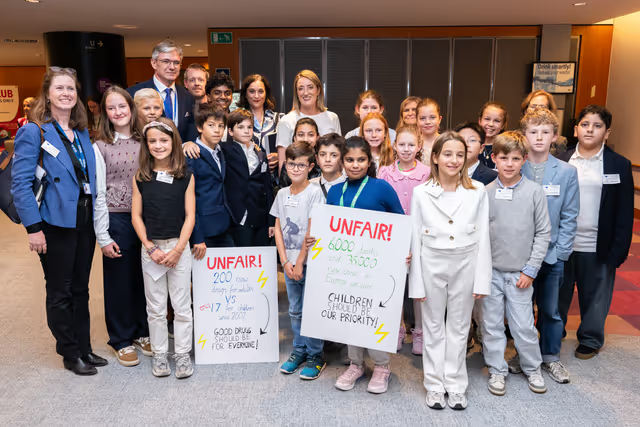
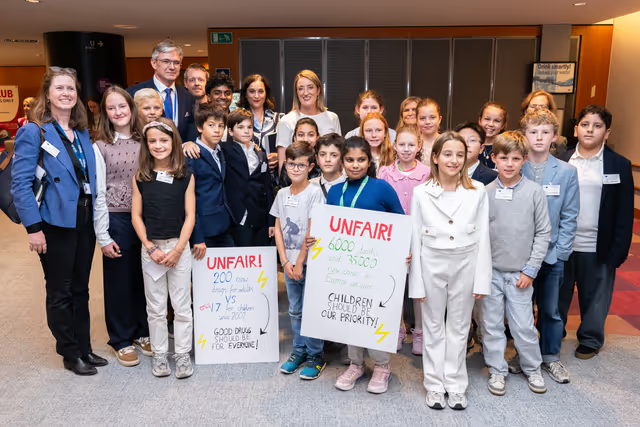
The patient perspective was brought directly into the discussion by Léonor, a 10-year-old childhood cancer survivor from Belgium, who called for greater action to ensure children benefit from advances in cancer treatment.
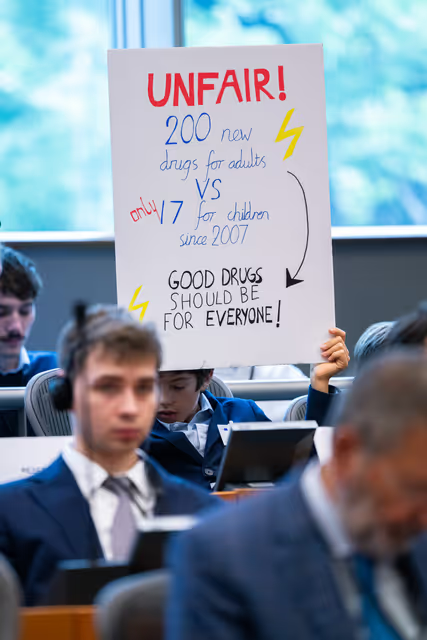
“Curing cancer is improving for everyone. Except for children. My wish is for you to help us, children, and approve the medicines, because today, you can make history for all the little ones like me. So, the question I’m asking you is, do you prefer to help us or to let us suffer?” – Léonor, childhood cancer survivor
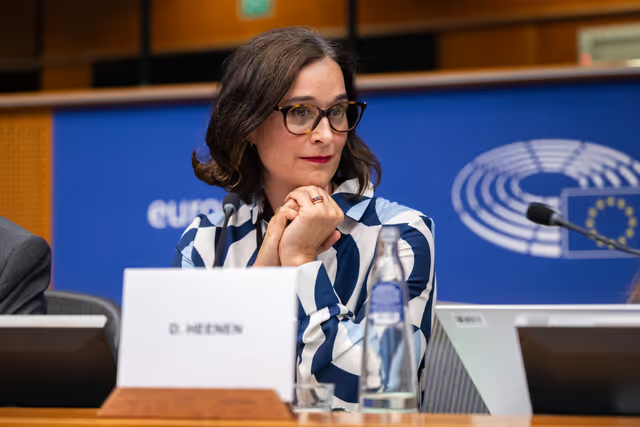
Delphine Heenen, patient advocate, founder of KickCancer and Head of European Affairs at CCI Europe, highlighted the need for structural solutions to address the specific challenges of developing medicines for children with cancer.
“Philanthropy matters, but cannot be the only answer to a systemic problem. The creation of a favourable environment is crucial. And we need to remove the barriers that prevent the development of medicinal products in rare paediatric populations like paediatric cancers.” – Delphine Heenen, CCI Europe
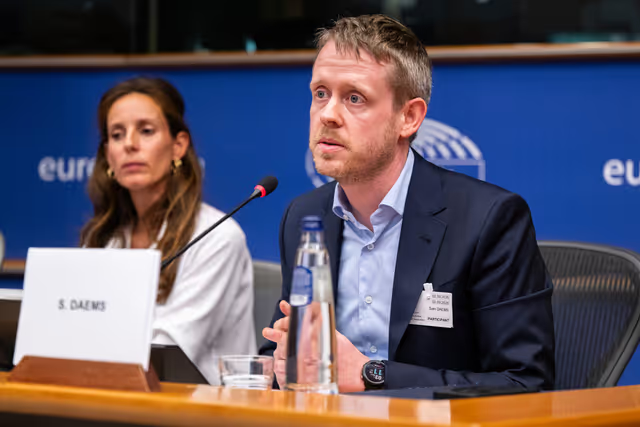
Sam Daems, economist, investor and bereaved father, called for a more connected approach to paediatric oncology, looking at the full pathway of care and identifying where barriers can be removed.
“We cannot legislate a way to biological diversity in cancer, and there’s nothing we can do there. But what we can do is really think through the entire pathway for paediatric oncology. We can really think through, end to end, what we need to take away the friction, to connect the different thoughts, and to make sure that we can create progress for these children.” – Sam Daems, bereaved father
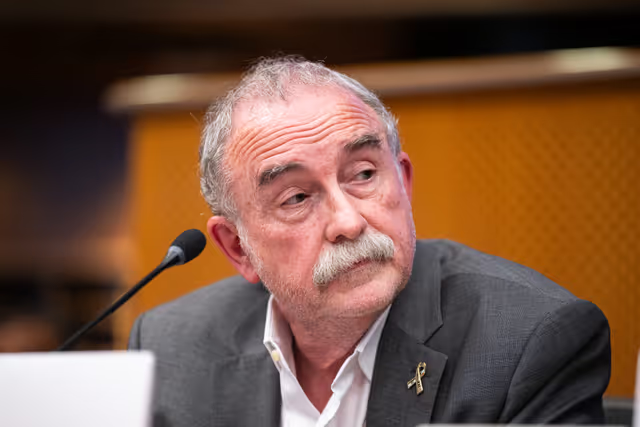
Professor Gilles Vassal, paediatric oncology expert and representative of SIOP Europe, stressed the need for stronger incentives to support the development of medicines specifically for children with cancer.
“At the moment, in all the regulations in Europe, including the new Pharmaceutical regulation that you will be voting on in December, there is no incentive to incentivise biotech companies to develop specific paediatric oncology drugs. So, if there are no specific measures in the EU Biotech Act focusing on the needs of , severe paediatric, life-threatening rare diseases such as childhood cancer, it will not work, as it did not work in the Orphan regulation.” – Prof. Gilles Vassal, SIOP Europe
The discussion also highlighted opportunities for European action, including the negotiations on the Multiannual Financial Framework (2028–2034), dedicated support for unmet medical needs, and the potential revision of the Cross-Border Healthcare rules . Speakers called for European frameworks that can improve access to highly specialised care and enable children to participate in clinical trials in other Member States when the expertise they need is not available in their home country.
The participation of CCI Europe and SIOP Europe in the SANT exchange of views marks an important step towards ensuring that the perspectives and needs of children, adolescents, survivors and families affected by childhood cancer are included in European health policy discussions.
Before the session, President Metsola met Léonor and her classmates providing the opportunity to speak directly with the children and, connect the European Parliament with the experiences of those affected by childhood cancer.
The event recording is available with translation in Spanish, German, Greek, French, Croatian, Italian, Lithuanian, Dutch, Polish, Portuguese, and Swedish.
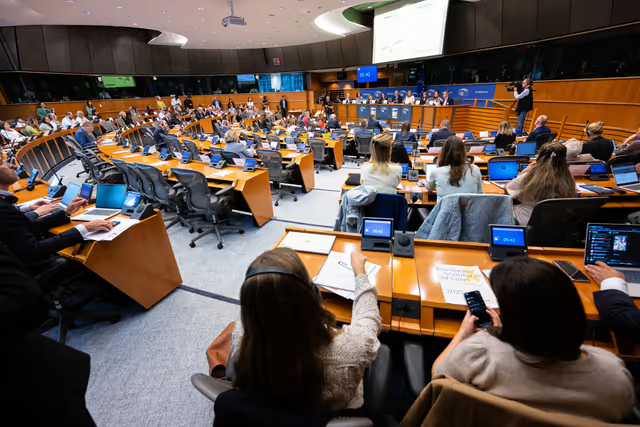
With thanks to the European Parliament for providing the photographs from the event.
© European Union 2026 – Source: European Parliament (EP). Photographer: Laurie DIEFFEMBACQ.